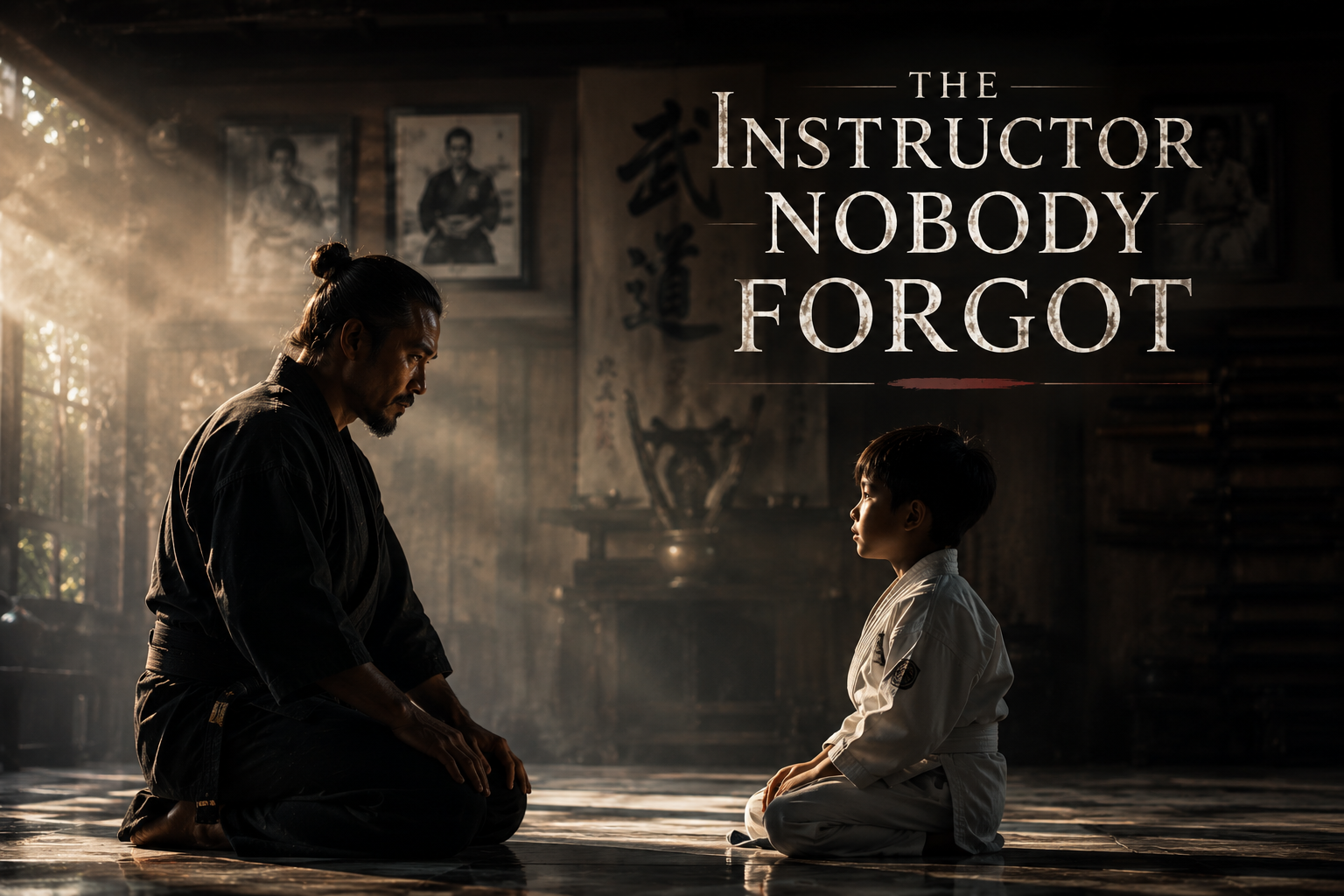
Not every martial arts instructor becomes famous. Most will never appear in magazines, win world titles, or gather millions of followers online.
Yet somewhere, years later, a former student still remembers them.
Not because of a spinning kick.
Not because of medals.
Not because of how powerful they looked.
But because of how they taught.
The instructor nobody forgot was often the one who stayed patient with beginners. The one who corrected mistakes without humiliation. The one who saw potential before the student saw it themselves.
Martial arts schools are filled with small moments that rarely appear important at the time:
- a nervous child finally answering loudly during class,
- a teenager gaining confidence after months of quiet training,
- a student learning discipline after repeated failure,
- a tired adult finding peace for one hour after a difficult day.
Great instructors understand something important:
Teaching martial arts is never only about fighting.
Every class becomes a transfer of mindset, discipline, emotional control, respect, perseverance, and belief. Sometimes students forget the exact techniques they learned. But they remember how training changed them.
Many people can demonstrate techniques.
Far fewer can inspire consistency.
The instructor nobody forgot is usually not the loudest person in the room. Often, they are simply the one who kept showing up year after year, helping students improve one lesson at a time.
Martial arts history is built on this quiet tradition of teaching. Knowledge passes from one generation to the next — not through trophies alone, but through patience, repetition, correction, and example.
Long after belts fade and certificates gather dust, students still remember:
- who encouraged them,
- who challenged them,
- who believed in them,
- and who helped shape the person they became.
That is the real legacy of a martial arts instructor.
Not just creating stronger fighters.
But creating stronger people.